
 | Prof. Leping YangNational University of Defense Technology, ChinaLevel 5 Professor and Ph.D. advisor at the School of Aerospace Sciences, National University of Defense Technology; academic leader in the university’s research on aerospace security and military theory; has long been engaged in research on space strategy, orbital competition, and space operations. He has published more than 10 monographs, translations, and textbooks, including *A Comprehensive Discussion on Space* and *Guide to Space Security*, and has published over 50 SCI-indexed papers. He has received one First Prize in the National Teaching Achievement Awards, two Second Prizes in the PLA Teaching Achievement Awards, two First Prizes and three Second Prizes in the PLA Science and Technology Progress Awards, and has led dozens of projects, including major projects funded by the National Natural Science Foundation and the National Social Science Fund in the field of military studies, key support projects under the 14th Five-Year Plan, and a series of major strategic research projects. He has been awarded the State Council’s Special Government Allowance. |
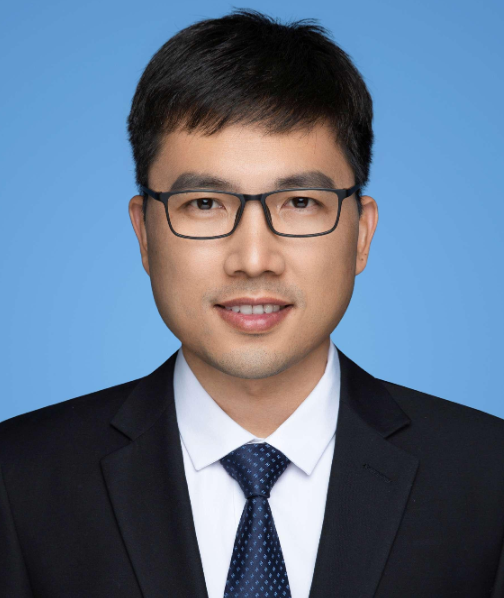 | Prof. Xin WenShanghai Jiao Tong University, ChinaProfessor XinWenis a National Young Talent whose research focuses on flow control for advanced aircraft and heat transfer control in turbomachinery. His research interests include experimental data mining and modeling using deep neural networks and compressed sensing to predict the flight states of aircraft (such as unmanned aerial vehicles); high-precision flow control of flow separation phenomena in complex systems such as aircraft (including UAVs) and engine vector nozzles; and the development of high-precision machine vision measurement algorithms and related techniques. |
 | Prof. Qinghua ZengSun Yat-sen University, ChinaHe has been engaged for many years in teaching and research on the design, simulation, and fault diagnosis of unmanned aerial vehicle (UAV) control systems. He has published more than 50 papers in core journals and authored two textbooks as the first author. His research interests include UAV control system design and simulation, integrated airframe/engine control technologies for hypersonic vehicles, experimental systems for teaching and research in navigation, guidance, and control, rapid prototyping and experimental evaluation of indoor autonomous flight, and fault diagnosis and health management technologies for aircraft control systems. |
 | Prof. Baolin TianBeihang University, ChinaHe has developed a new generation of multiphysics coupling simulation programs and led the completion of several major software platform development projects for key models. He has published over 100 papers in journals and holds five software copyrights. He has been selected as a Leading Talent in Science and Technology Innovation for Middle-Aged and Young Scientists by the Ministry of Science and Technology, as well as a Leading Talent in Science and Technology Innovation under the National Special Support Program for High-Level Talents. Current research interests include: numerical simulation and flow mechanisms of complex flows such as compressible multiphase flows, two-phase detonations, and fluid-structure interaction; interface instabilities and turbulent mixing; and the application of machine learning in fluid mechanics. |